 ✕ COPE
Hair
Rice Water Rinse
Starch coats the shaft and makes hair feel thicker. It does not reach the follicle, and protein build-up on the shaft makes hair brittle over time.
Also called: rice water · fermented rice water · yao women hair
Verdict — cope
The mechanism does not hold. Your time is better spent elsewhere.
Evidence grade D
Nobody has demonstrated this works. Note that this grades the evidence, not the danger — read the verdict for that.
Mechanism
Deposits starch and small amounts of inositol on the cuticle, which smooths and adds slip. Hair growth originates in the follicular bulb, below the skin, which a rinse cannot reach.
Citations
- Hair cosmetics: an overview of shaft treatments and their limitsInternational Journal of Trichology · 2015
The full read
The feel is real and the claim is not. A starch film on the cuticle genuinely improves smoothness and light reflection for a wash or two — which is why the before-and-afters look convincing — and cannot influence anything happening in the dermal papilla. Repeated use without balancing moisture causes protein overload: stiff, straw-like hair that snaps, which then reads as breakage rather than growth. The Yao village folklore that drives the trend is about hair length in a population, not a tested intervention. Harmless, occasionally counterproductive, definitionally a cope for hair loss.
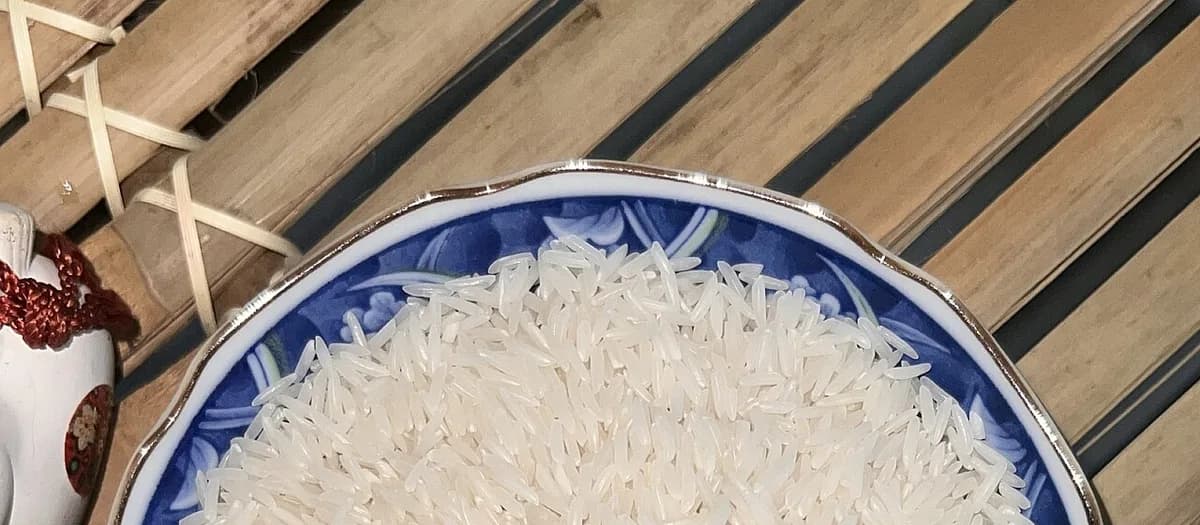
Photo: Uncooked ST25 rice on bamboo surface.jpg by VinhNguyen.1257 · CC BY-SA 4.0 via Wikimedia Commons.