Skincare
Azelaic Acid
The most useful under-recommended topical here: works on acne, rosacea redness and post-inflammatory pigment at once, and is safe in pregnancy.
Also called: azelaic · finacea · skinoren
Verdict — legit
Does what it claims, with evidence behind it.
Evidence grade B
At least one good randomised trial, or consistent findings across controlled studies.
Mechanism
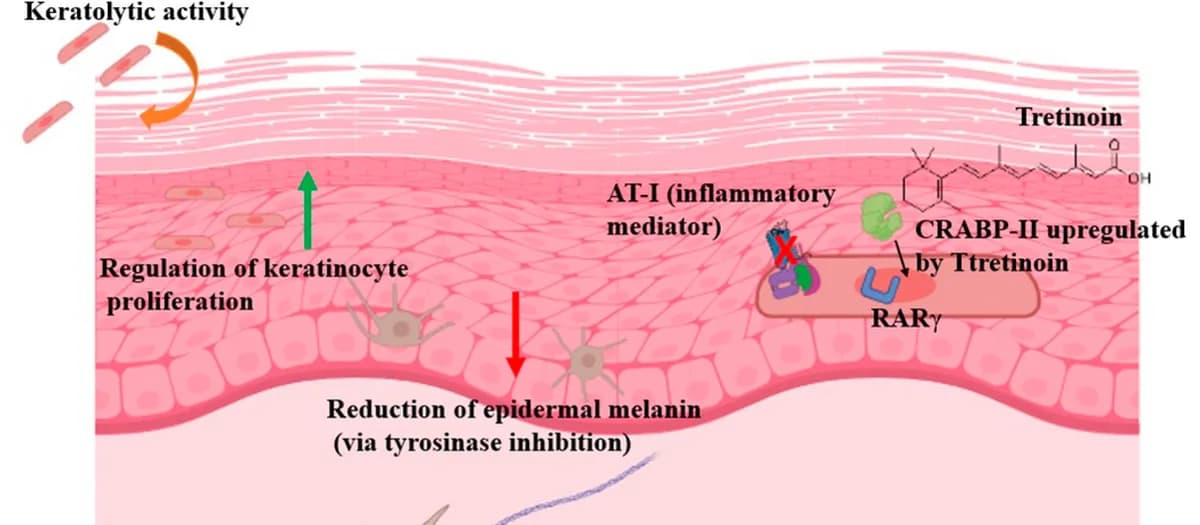
Competitively inhibits tyrosinase (pigment), normalises keratinisation, is antimicrobial against C. acnes, and scavenges reactive oxygen species driving rosacea erythema.
Citations
- Azelaic acid 15% gel in the treatment of papulopustular rosacea: a randomized vehicle-controlled trialJournal of the American Academy of Dermatology · 2003
- Azelaic acid in the treatment of acne and hyperpigmentation: a reviewInternational Journal of Dermatology · 2019
The full read
Azelaic acid earns its place by covering three problems that usually need three products, with a mild enough profile to sit alongside a retinoid. Trials support 15–20% for papulopustular rosacea and for acne, and it is one of the few brightening agents with real evidence that is not hydroquinone. Downsides are honest: it is slow (12 weeks before judging it), it stings transiently, and the cosmetic 10% versions are noticeably weaker than the prescription strengths. Particularly strong pick for darker skin types, where post-inflammatory pigment is often the real complaint rather than the acne itself.