 ✕ COPE
Skincare
Tanning Beds for Shadow & Definition
It delivers the tan and it delivers a Group 1 carcinogen. Use before age 35 raises melanoma risk by around 60–75%.
Also called: sunbed · tanning salon · solarium · tanmaxxing
Verdict — cope
The mechanism does not hold. Your time is better spent elsewhere.
Evidence grade A
Multiple randomised controlled trials, or a meta-analysis of them. As settled as this field gets.
Mechanism
Indoor tanning devices emit UVA at multiples of midday-sun intensity. UVA penetrates to the dermis, causing both mutagenic damage and the collagen degradation that produces leathery photoaging.
Citations
- The association of use of sunbeds with cutaneous malignant melanoma and other skin cancers: systematic review and meta-analysisBMJ · 2012
- A review of human carcinogens — Part D: radiation (IARC Monographs)The Lancet Oncology · 2009
The full read
A tan genuinely increases perceived contrast and can flatter facial structure — that part of the claim is honest, and pretending otherwise would be the kind of moralising that makes people ignore the rest. Here is the rest: the IARC classifies UV-emitting tanning devices as Group 1 carcinogenic to humans, the same category as tobacco, and the risk elevation is steepest for exposure under 35, which is exactly this audience. It is also self-defeating on its own terms, since UVA is the wavelength that ages skin fastest. If the goal is the look, sunless tanner reproduces it with zero UV and is graded as a cosmetic, not a risk.
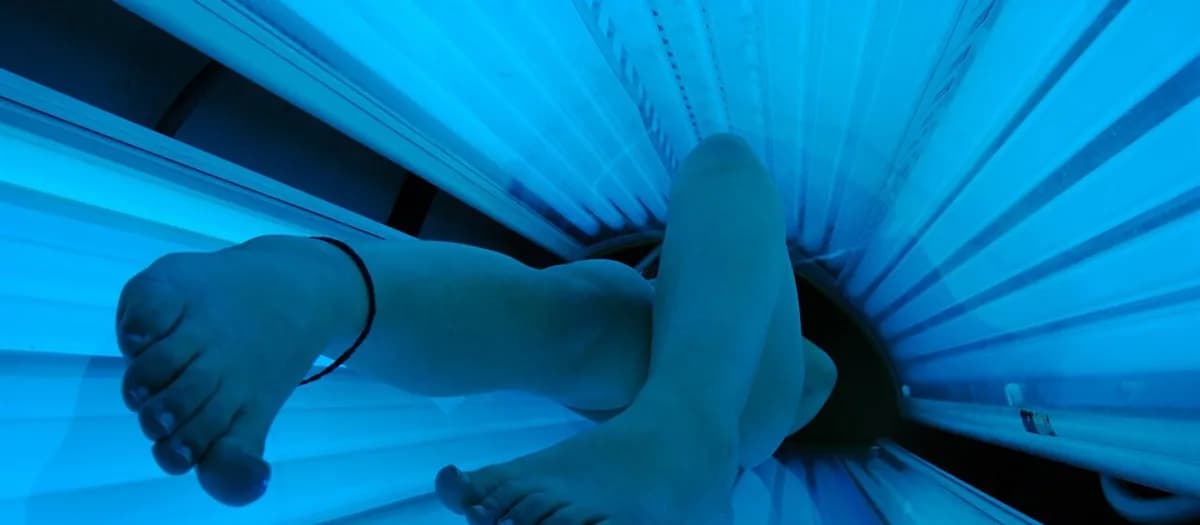
Photo: Tanning bed in use.jpg by Evil Erin · CC BY 2.0 via Wikimedia Commons.